What the Fuzzy White Coating on Baby Carrots Really Is (And Why You Shouldn’t Toss Them)
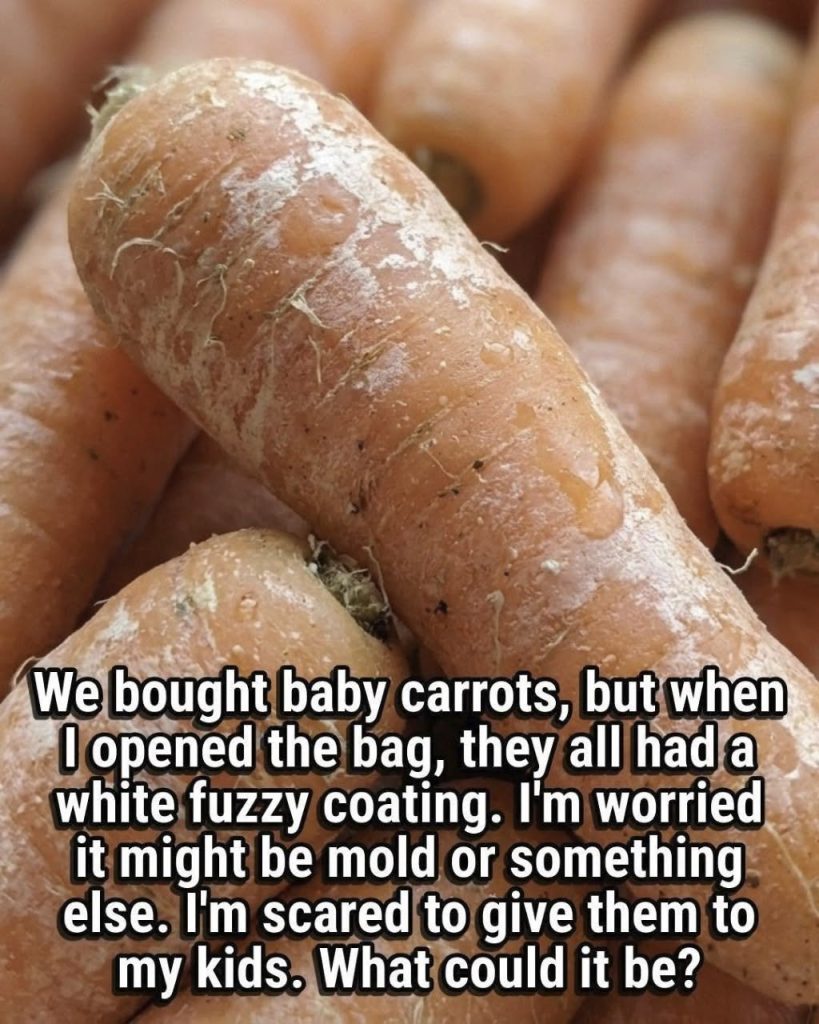
Fresh produce can be expensive, so it’s frustrating to bring home a bag of vegetables only to notice a strange white coating a few days later. Baby carrots are especially known for developing a pale, chalky-looking film that can make them appear spoiled.
If you’ve ever opened a bag of baby carrots and wondered, “Are these moldy?”, you’re definitely not alone.
The first time you see that white coating, it can be alarming. The carrots may look dusty, dry, or even slightly fuzzy, which naturally makes you want to throw the entire bag away.
But in many cases, the white coating is not mold at all.
The Short Answer: What Is the White Coating?
That white appearance is commonly known as “white blush” or “carrot blush.”
It happens when carrots lose moisture from their surface. Baby carrots are particularly prone to this because they are usually peeled and polished, removing much of the protective outer layer that helps prevent moisture loss.
As the exposed surface loses water, the carrot can develop a white, dry, chalky appearance.
The good news is that carrot blush itself is generally a quality issue rather than a sign that the carrot has spoiled.
Why Does It Happen?
Carrots naturally contain a lot of water. Once they are peeled and exposed to air, some of that moisture gradually evaporates.
As the surface dries:
- The outer cells become dehydrated.
- The surface becomes less shiny.
- The carrot may appear pale or whitish.
- The dried surface can look slightly powdery.
This is one reason baby carrots can develop the white coating much faster than whole, unpeeled carrots.
Think of it as a sign that the carrot has lost some moisture, rather than automatically assuming that it has gone bad.
Why Does It Sometimes Look Like Mold?
This is what makes carrot blush so confusing.
The dried surface can have a pale, uneven, or slightly rough appearance. When several carrots in the same bag develop it, the effect can look almost like a white fuzzy coating.
However, not every white substance on a carrot should automatically be assumed to be harmless dehydration. Actual mold can also grow on carrots, especially when they have been stored too long or exposed to excess moisture.
That’s why it’s important to look at the carrot’s color, texture, smell, and overall condition.
Carrot Blush vs. Mold: How Can You Tell?
