How To Collect & Grow Milkweed Seeds to Save the Monarch Butterfly
Milkweed is Important to More Than the Monarch
Milkweed is important to the Monarch because it’s the only food the caterpillar will ingest. But many other insects feed on milkweed, most being native bees. Other butterflies and moths beyond the Monarch also prefer to nibble milkweed leaves.
Even predatory insects beneficial to gardeners everywhere can be found sipping nectar from milkweed. Bugs like aphid mites, the braconid wasp and the assassin bug, can all be found on a cluster of milkweed flowers.
What Milkweed Should I Grow?
Monarch butterflies eat two types of milkweed – Common milkweed (Asclepias syriaca) and Butterfly weed (Asclepias tuberosa). But there are over 70 species of milkweed native to the United States and Canada. Once you take care of the Monarch’s needs, consider planting another milkweed native to your region. You can reach out to your local extension office for more information.
Where Can I Get Milkweed Seeds?
Thanks to concerned conservationists, more native seed suppliers are propagating milkweed for seed collection and distribution. A few reputable sources for milkweed seed are:
Rare Seeds – Baker Creek Heirloom Seeds
Park Seed
Hudson Valley Seed Co
Select Seeds
Of course, the easiest way to source milkweed seeds is to go outside and look for them.
How to Harvest & Save Milkweed Seeds
Before you head out to collect milkweed seeds, it’s important to know that the sap from milkweed is an irritant. Consider wearing gloves if you have sensitive skin. Always wash your hands well after handling milkweed if you don’t wear gloves.
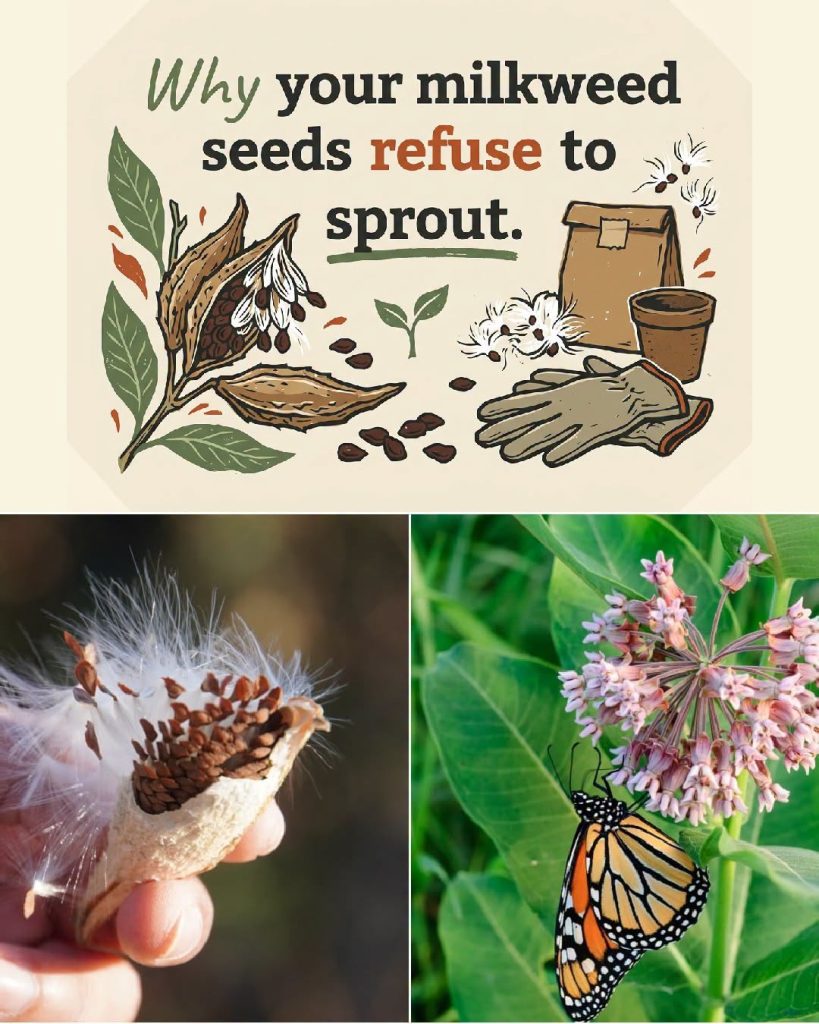
Collect milkweed seed pods in the fall. You may need to check them a few times to see when they’re ready. If you pick them too soon, the seeds won’t be viable. The seeds must be dark brown. If you pop open a pod to find white or light brown seeds, you’ve picked it too soon.
Look for brown pods that are just starting to crack open. Of course, if you wait too long, you’ll find an empty pod, as the wind will have done its job.
Separate the seeds into a bowl and allow them to dry thoroughly. You can store them in a paper bag while waiting for them to dry.
There are plenty of recommendations on the internet for how to remove the fluff from milkweed seeds. I find this bizarre. Nature plants milkweed every year with the fluff attached. Why go to all the trouble of removing that tiny bit of silk attached to each seed? It makes a great handle when you’re plucking out individual seeds to plant.
If you feel you must remove the fluff, place the seeds in a paper bag with a few pennies and give it a good shake. Snip a corner off the bag and shake out the clean seeds.
Store your completely dry seeds in an airtight container in the fridge.
Vernalized Seeds – Plants Sense the Seasons
see continuation on next page
